The platform, area by area
Floorman wasn't designed on a whiteboard: it has spent years running real tournaments in casinos and on a national tour. This is what it covers, told the way it's used on the floor.
This is what running a tournament looks like
The system in action during a Main Event of 217 entries across 16 tables. The data is a demo; the software is the same one running on the floor every week.
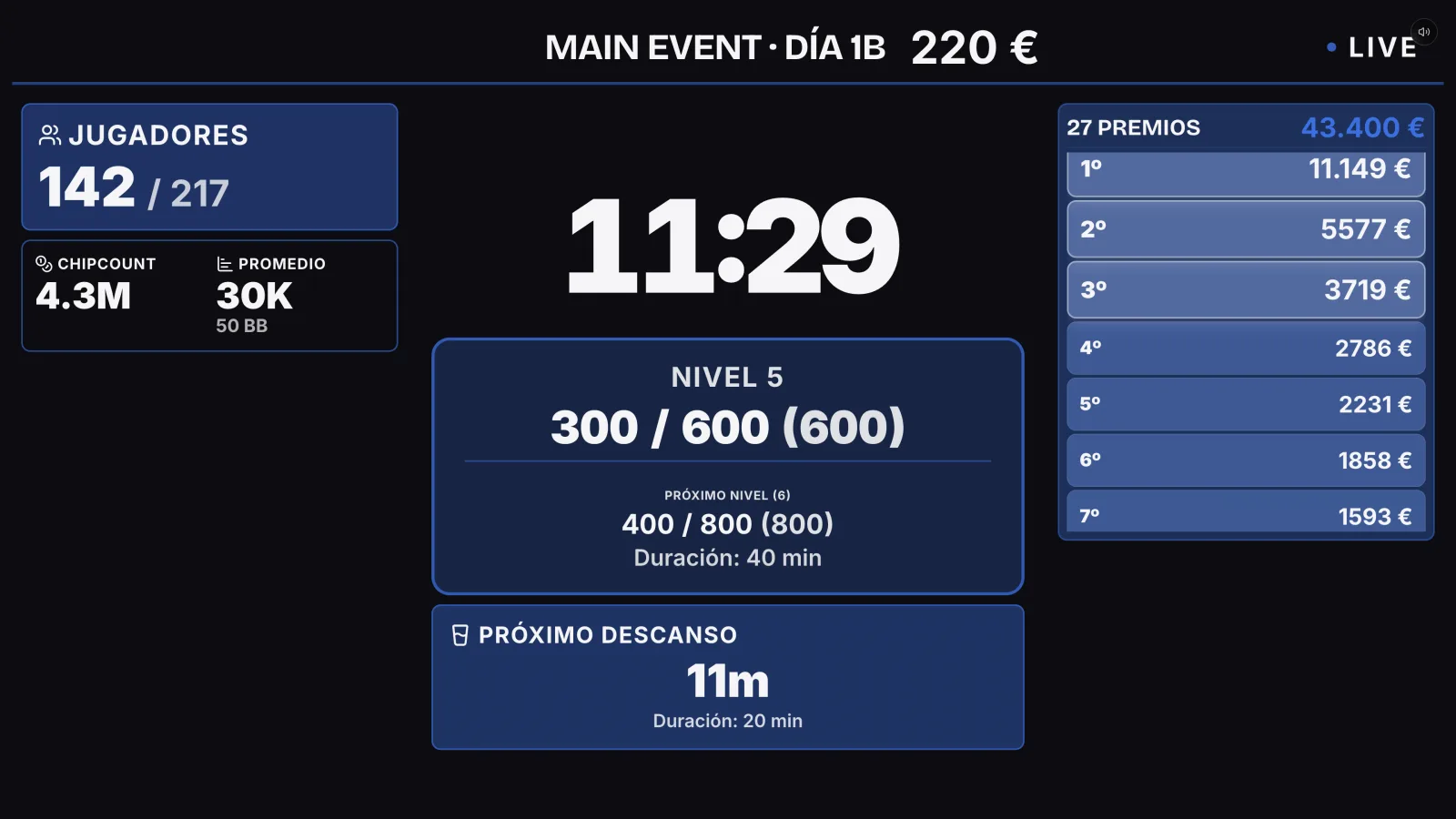
The floor TV
Level, blinds, players left, prize pool and the payout breakdown. It's the screen the whole room is watching, and the one that can't freeze: it runs synced to the second with the director's clock.
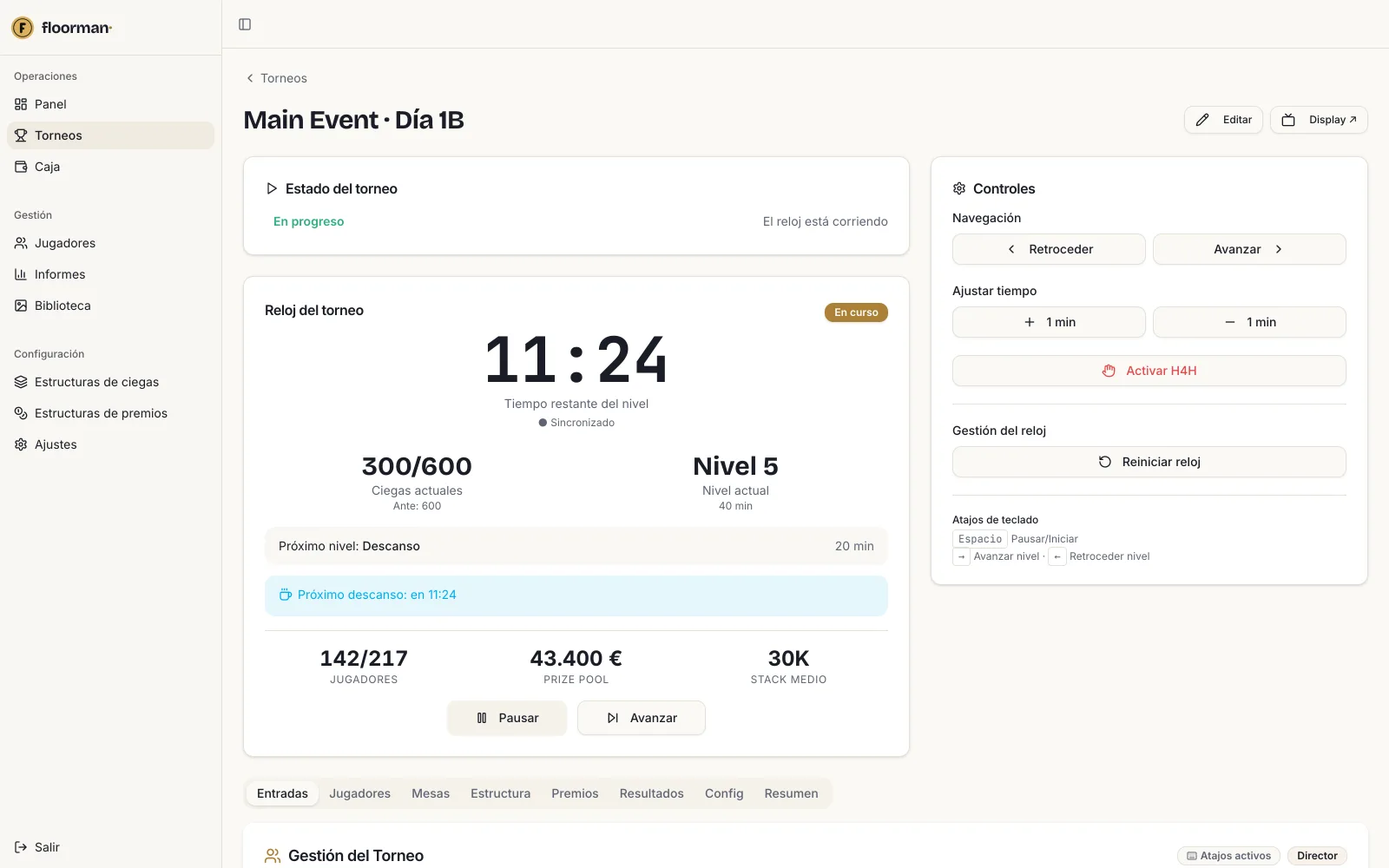
The director's station
Pause, advance a level, adjust minutes or start hand-for-hand, with keyboard shortcuts so you never take your eyes off the room. Below, each part of the tournament in its own tab.
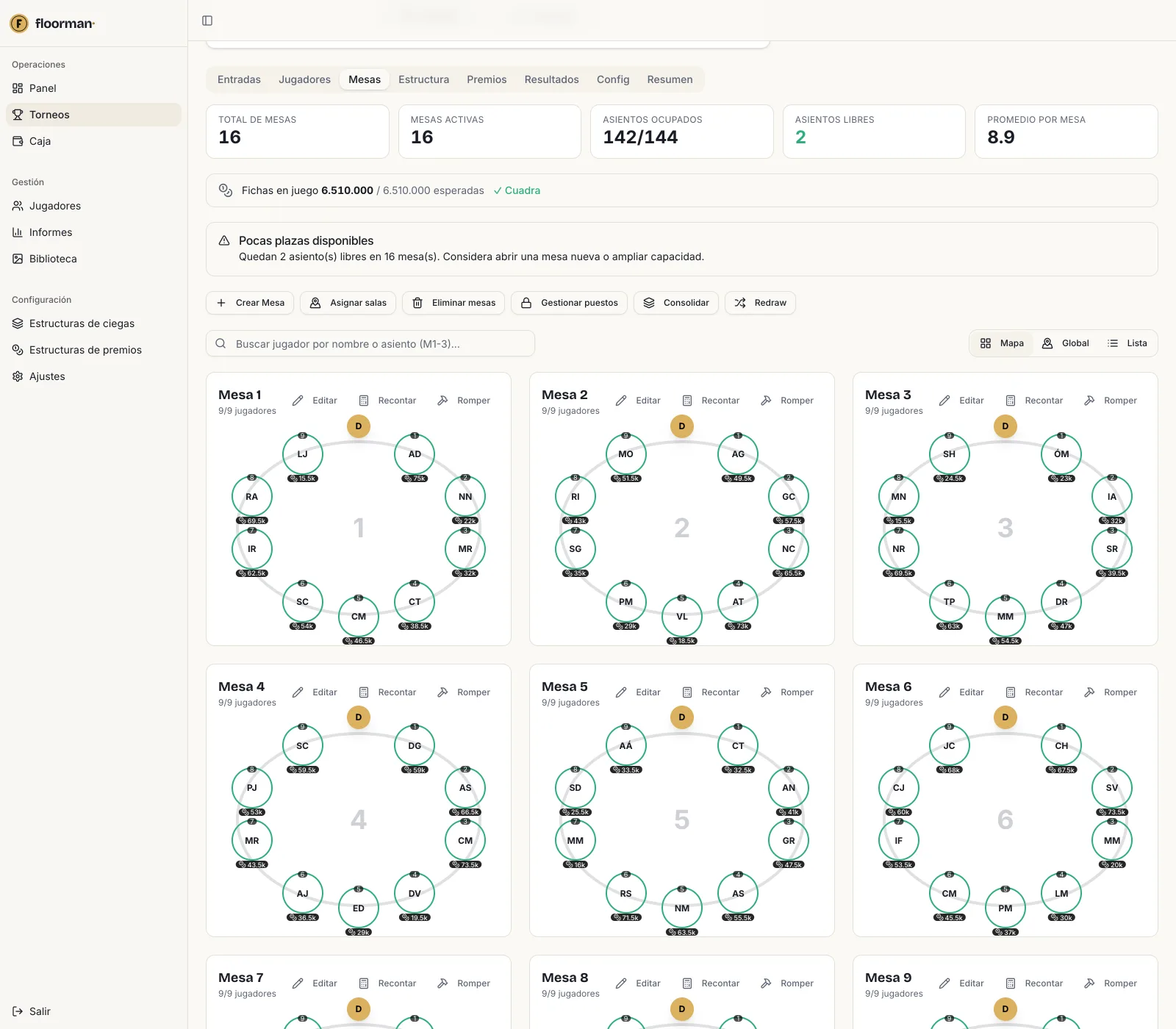
Tables and seating
Every table with its seats, who is sitting there and how many chips they have. The chips in play are checked against what's expected: if it doesn't add up, it says so.
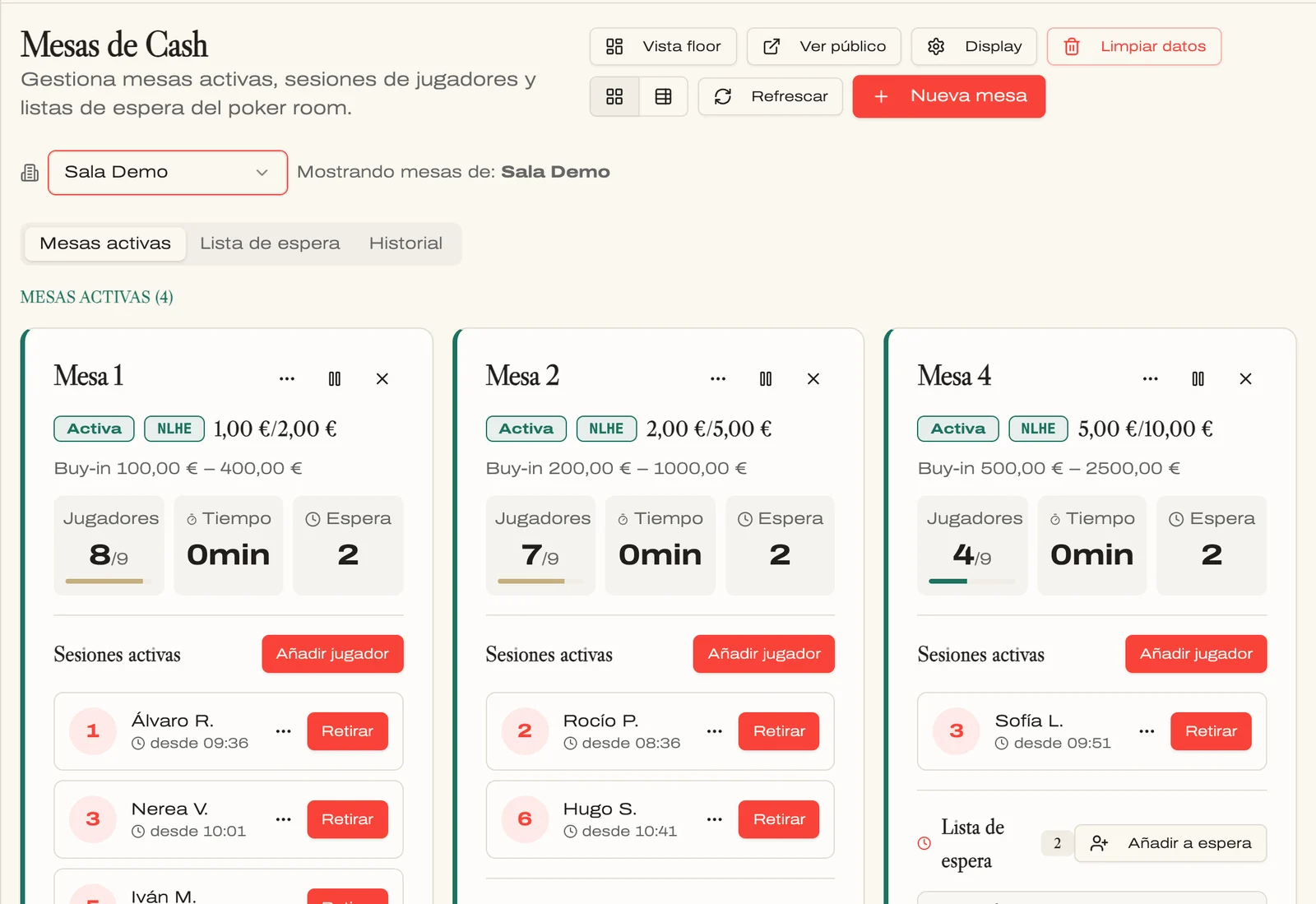
The cash room
Every table with its game, its stakes and its buy-in limits; how many seats are taken, who is sitting there and since when, and who is waiting for a seat. The cash room stops being run on a whiteboard.
The counter
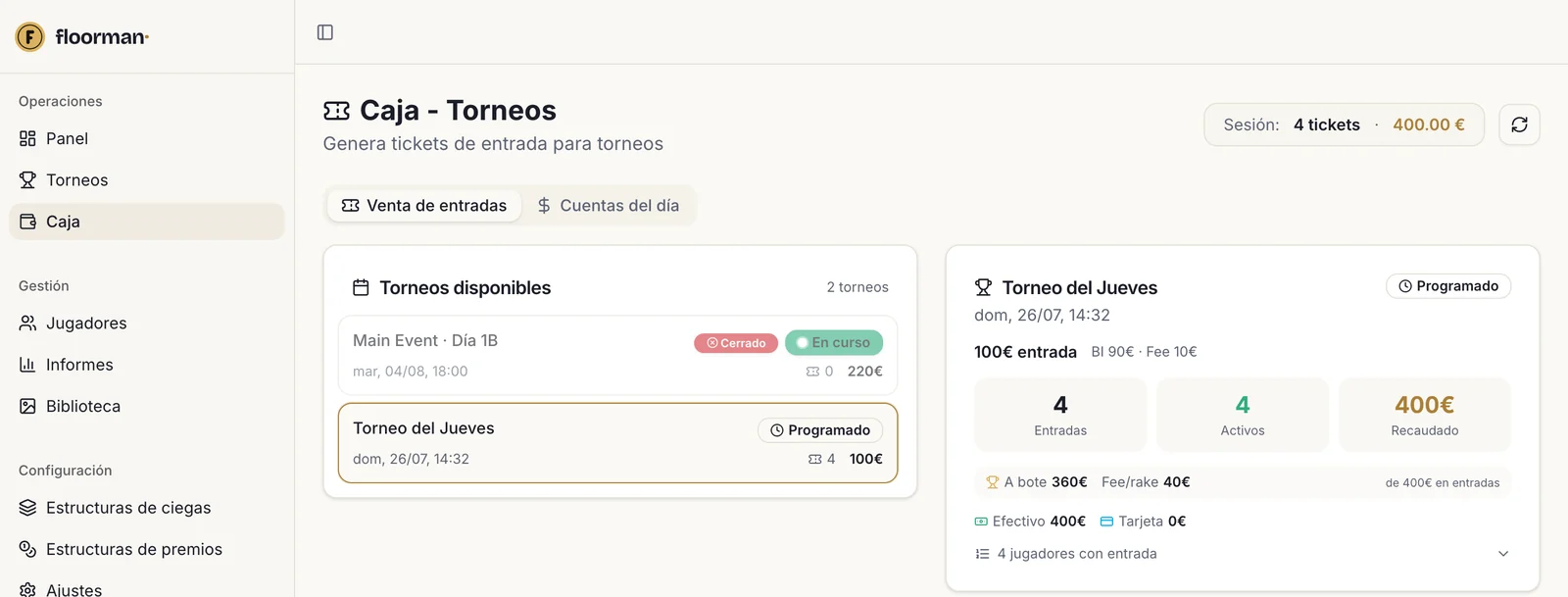
Entries are sold here and the money breaks itself down: how much goes to the prize pool, how much is fee, and how much came in as cash or card. By the time the session closes, the count is done.
The tour standings
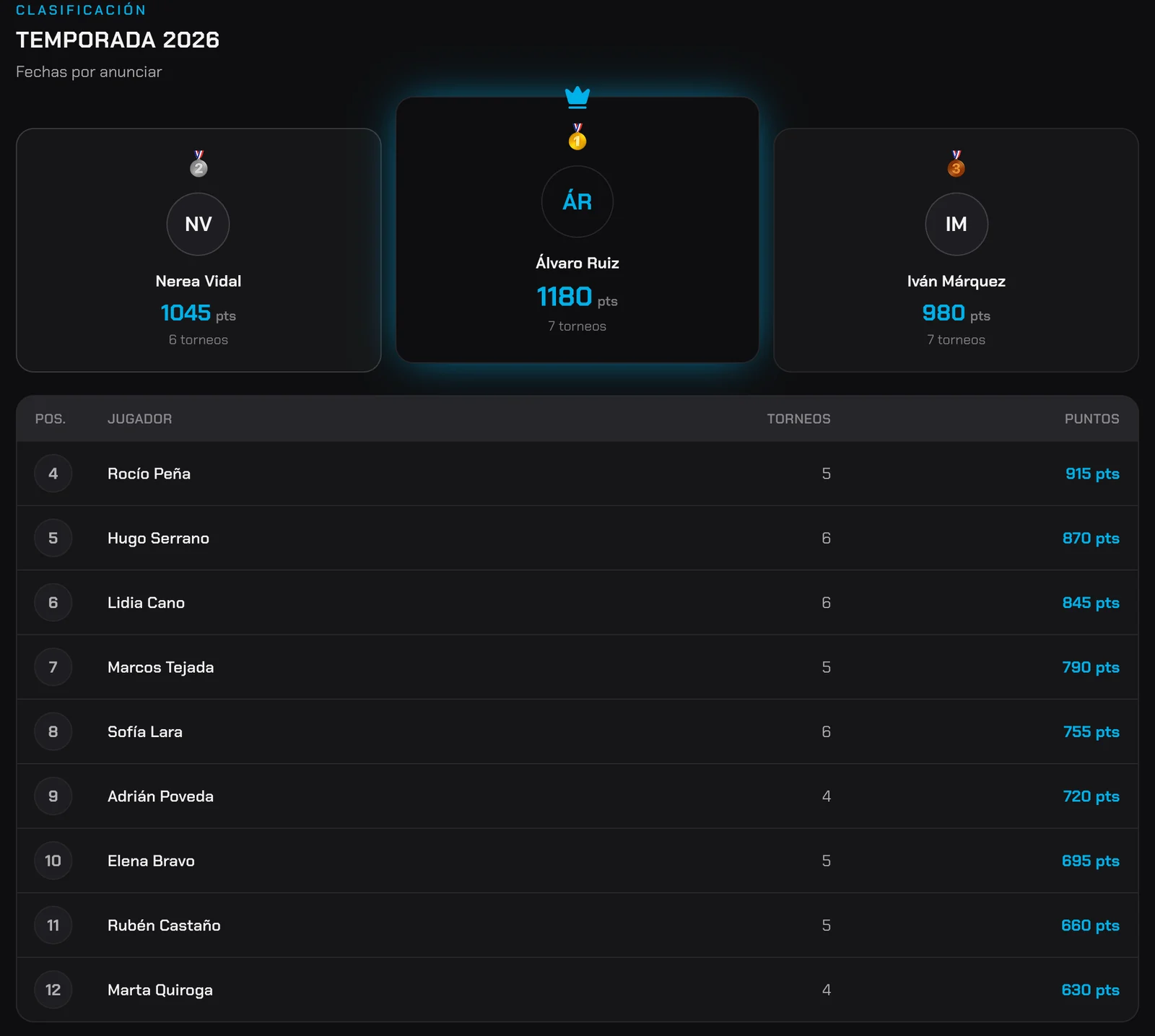
Points from every stop add up in the season standings, which publish themselves on the tour's site and on the player's phone.
The player's phone
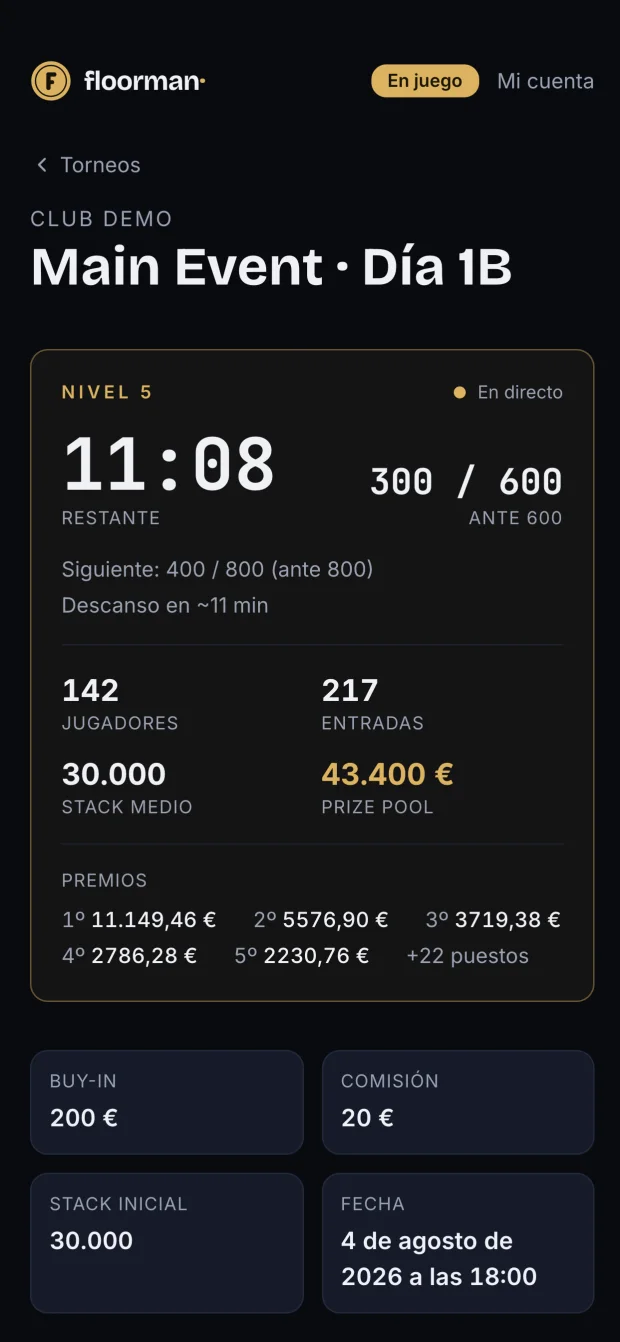
The same clock and the same payouts, in the player's pocket. Nothing to install: it opens from the QR code on the floor.
Area by area
Every block comes from running real tournaments, not from a requirements list.
- Tournaments
- Tournament templates and setup, reusable blind structures, entries, re-entries and add-ons, bust-outs, prize pool and payouts, results and final standings. The clock runs synced to the second across the director's panel, the floor TVs and the player's phone, with breaks that reposition themselves when the structure is edited, hand-for-hand mode, levels editable live without stopping play, and a multiclock for several tournaments on one screen.
- Tables and seating
- Seating from the first registration, balancing with automatic suggestions the floor confirms with a tap, full redraws at the touch of a button, guided table breaks and seats reserved for accessibility. Every move is logged: who moved whom, when and why. A floor screen for tables and printable lists for the start of the day.
- Multi-day, flights and formats
- Overlapping flights, each with its own clock and structure, bagging, stack consolidation between days and a guided day-2 redraw. Satellites that award seats plus cash for the remainder, and mystery bounty. Big festivals are the reason this module exists.
- Exact payouts
- Payout structures by field size, reference templates, ITM calculated automatically, added values, documented deals and a house fee applied to whichever base the room decides. Floorman's guarantee: the payouts add up to 100 % of the prize pool, to the cent.
- Cash
- Cash tables by game and stakes with their capacity and buy-in limits, player sessions with buy-ins and cash-outs, a waiting list with its own floor screen, and table close-out with rake, tips and notes. The cash room stops being run on a whiteboard.
- The cage
- Selling entries, re-entries and add-ons at the counter with prize pool, bounty and fee broken out; counts and close-outs by session and by event; end-of-day reconciliation; and integrated card payments where the room already uses them. The day's numbers, balanced before the lights go off.
- Players
- The room's player base with tournament and cash history, team notes, a digital card with QR to register in seconds, early registration from a phone and merging of duplicate records. Shorter queues at the counter, more time playing.
- Communication
- Notices and notifications for registered players, live tournament information on the floor screens and on their phones, and a public site with the room's or the tour's calendar. Information arrives on its own instead of being repeated over the PA.
- Tours and standings
- Seasons with stages across different venues, a configurable scoring engine, standings recalculated as each tournament closes, per-player history and a tour site with calendar and results. Built for multi-venue tours.
- Management and reports
- Activity and financial reports by tournament, by session and by period, with export; per-person roles (management, floor, cage, registration) and several venues under the same organisation, each with its own data and its own screens.
- Your brand on screen
- Colours, fonts and logo per room or per tour. The TVs, the player area and the public site speak your visual language — Floorman works behind the scenes, your brand is the one on show.
- Real time and reliability
- Everything that changes in the panel reaches the screens and the phones instantly: nothing to refresh, nothing to copy across. Each instance is isolated, with its own data and backups, and can be deployed on dedicated infrastructure when the operator needs it.
Shall we look at it with your operation?
A demo on one of your tournaments says more than any product page.